
No products in the cart.
Education, Education, OFW, OFW Advocacy, Teachers
Returning OFW Teachers: 7 Powerful Reasons They Matter in 2026
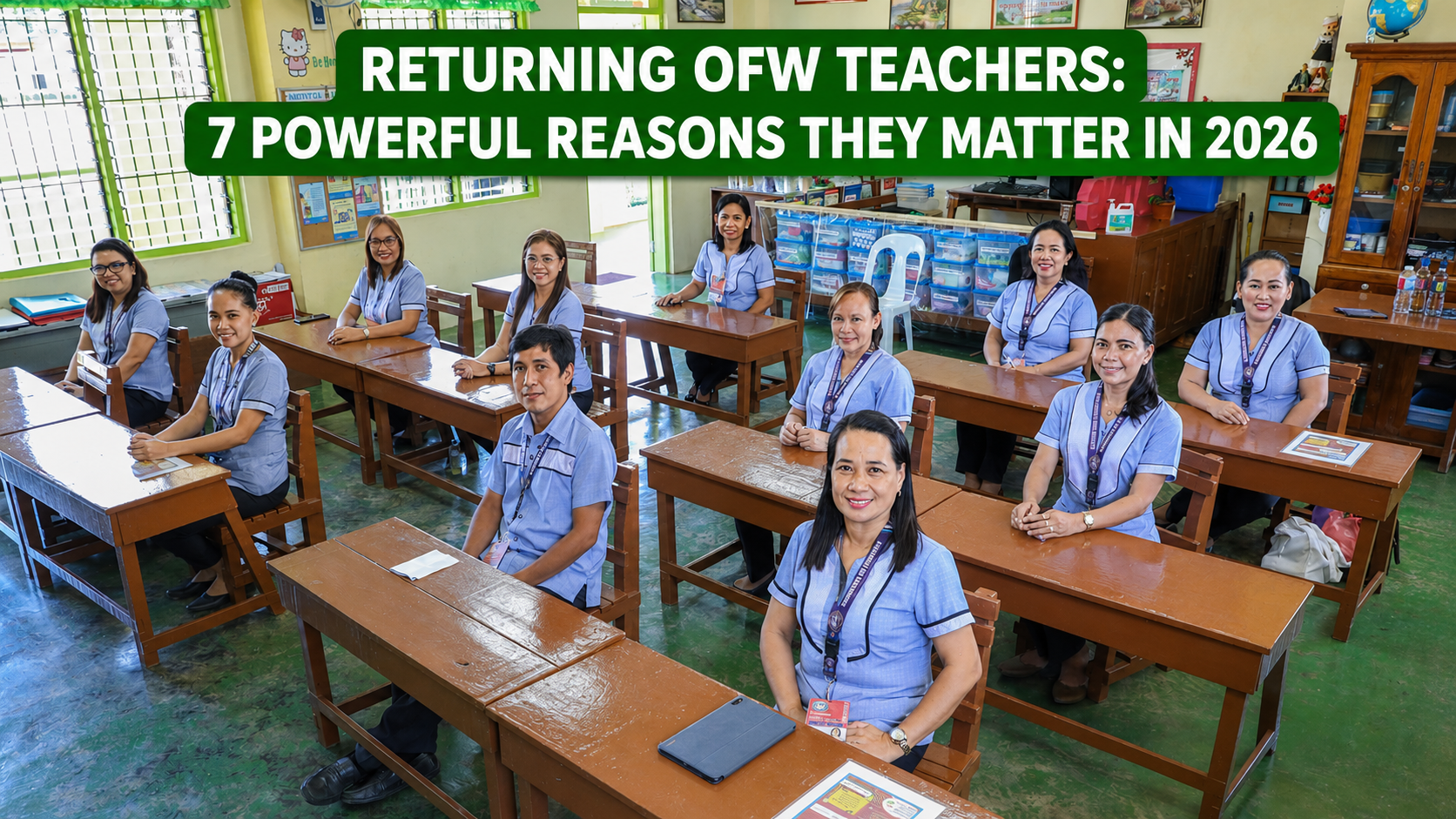
Returning OFW teachers are becoming one of the most inspiring stories in Philippine education today. As more Filipino educators come home after working abroad, they are bringing international experience, resilience, and valuable teaching skills back to local classrooms. According to the Department of Education (DepEd), thousands of returning OFW teachers have already transitioned into public school service through the SPIMS program. If you are interested in similar updates, you can also read our posts on OFW reintegration programs in the Philippines and Philippine education news.
Returning OFW Teachers: 7 Reasons They Matter in 2026
Returning OFW teachers are giving new hope to Philippine education in 2026. Many Filipino educators are coming home after years of work abroad. They bring global experience, strong teaching skills, and fresh ideas for local classrooms.
The Department of Education said at least 11,056 licensed teachers have returned to public school service through the Sa Pinas, Ikaw ang Ma’am at Sir or SPIMS program. The program has helped Filipino teachers return to classrooms since 2014.
For more updates, you can also read our posts about OFW reintegration programs in the Philippines and Philippine education news.
1. Returning OFW Teachers Bring Global Experience Home
Returning OFW teachers do not only bring teaching licenses. They also bring real experience from schools and workplaces abroad.
Many have learned how to adjust to different cultures. They have worked with diverse learners. They have also handled challenges far from home.
These lessons can help Philippine classrooms. Students can learn from teachers who have seen different education systems.
2. They Help Strengthen Public Schools
Philippine schools need more teachers. Returning OFW teachers can help fill that gap.
DepEd has described SPIMS as a way to support teacher reintegration. It also helps schools gain skilled educators who already have training and experience.
This makes the program important for both teachers and students.
3. They Bring Fresh Ideas to Classrooms
Teachers who worked abroad often return with new methods. They may bring better classroom routines, stronger discipline, and creative teaching styles.
These ideas can help students become more active learners. They can also help schools improve daily teaching practices.
When returning OFW teachers share what they learned abroad, local schools benefit.
4. Their Return Helps Filipino Families Rebuild
Teaching abroad often means years away from family. Many OFW teachers leave children, spouses, and parents behind.
When they return home, they do more than restart their careers. They also rebuild family life.
This makes reintegration deeply personal. It supports both professional growth and emotional healing.
5. DepEd Gives Practical Support
DepEd has provided support for returning OFW teachers. During reintegration efforts linked to the Middle East crisis, DepEd said 8,047 teachers received employment-related financial aid.
The agency also said 521 teachers received online refresher courses. These programs help returnees prepare for public school work again.
This support matters because many OFWs come home during difficult times. They need clear steps, not just promises.
6. The Program Supports OFW Families Too
DepEd also offered help beyond employment. It opened access to education programs for OFWs and their families.
The agency supported registration for Accreditation and Equivalency tests. It also helped children of OFWs through the Philippine Educational Placement Test.
DepEd also opened access to the Senior High School Voucher Program. It offered 720 slots under the Teacher Education Scholarship Program for qualified family members.
These services make reintegration easier for the whole family.
7. Their Homecoming Supports Nation-Building
Returning OFW teachers are not just coming back for jobs. They are returning to serve Filipino learners.
Their story is also a story of nation-building. Their skills, sacrifice, and experience can help improve education at home.
Each teacher who returns can guide more students. Each classroom they enter can benefit from their wider view of the world.
Challenges Still Need Attention
Returning OFW teachers still need strong support. Hiring should be fast and fair. School placements should also be clear.
Families also need help during the transition. Children may need time to adjust to local schools again.
These needs become more urgent during regional crises. Some OFWs return home earlier than planned.
The government must keep support services active. For example, official announcements showed help for OFWs through a temporary OFW Help Desk in Cairo. The Philippine Embassy in Egypt ran it with DMW and OWWA from April 6 to 9, 2026.
Services like this help workers with labor concerns, documents, and welfare support.
Why This Story Deserves More Attention
Returning OFW teachers deserve more attention because their story affects many parts of Filipino life.
It is an education story. It is also a family story. Most of all, it is a story of service.
These teachers gained experience abroad. Now, they can use it to help students at home.
Their homecoming is not a step backward. It is a strong step toward better Philippine classrooms in 2026 and beyond.
| If you like reading this, please like and share my page, DIARYNIGRACIA PAGE.Questions or suggestions, send them to diarynigracia@gmail.comYou may also follow my Instagram account featuring microliterature, visit DIARYNIGRACIA INSTAGRAM. READ MORE AND SHARE!TSOK Chronicles: Unleashing Passion, Dedication, and Excellence in 20242023 Your Practical Wedding GuideInvestments and Finance Ultimate GuidePoetry Books: AnthologyShop By DiaryNiGracia |
DESCRIPTION
Returning OFW teachers are bringing hope, experience, and global teaching skills back to Philippine classrooms in 2026. Through the SPIMS program and other reintegration support services, Filipino educators who worked abroad are finding new opportunities to serve local learners, strengthen public schools, rebuild family life, and contribute to nation-building. Their journey shows that coming home is not a step backward, but a powerful move toward improving education in the Philippines.
Peace and love to you.